DevOps Transformation Roadmap for Bahrain Startups: From Manual Deployments to Platform Engineering | DevOps Bahrain
A practical 90-day DevOps transformation roadmap for Bahrain startups - from manual deployments to platform engineering maturity. Aligned with Tamkeen grants, EDB priorities, and the realities of scaling in Bahrain.
Every Bahrain startup that has reached product-market fit faces the same infrastructure inflection point. The deployment process that worked at 5 engineers - SSH into the server, run a script, pray - becomes a liability at 15 engineers. The “it works on my machine” debugging cycle that was tolerable when you shipped weekly becomes unacceptable when the business demands daily releases. The infrastructure that a founding engineer set up at 2 AM during launch week is now running production traffic worth real revenue, and nobody is entirely sure how it works.
This is the moment where DevOps transformation stops being a nice-to-have and becomes an operational necessity. And for Bahrain startups operating within the EDB ecosystem, scaling toward enterprise customers, or building in regulated sectors like fintech, the transformation cannot wait.
Why Bahrain Startups Hit This Wall Earlier
Several factors specific to the Bahrain market accelerate this inflection:
Regulated customers arrive early. In markets like the US or Europe, startups can often reach $5M ARR serving SMBs before enterprise compliance requirements become urgent. In Bahrain, your first significant customers may be banks, government entities, or large family-office-backed corporates - all of whom require evidence of controlled change management, audit logging, and infrastructure security before they will sign a contract. If your deployment process is “Ahmed runs the script,” you will not pass vendor due diligence.
The talent market is constrained. Bahrain has a growing but still small pool of senior engineers. When your deployment process is manual and fragile, you need more engineers to maintain it. When deployments are automated and reliable, fewer engineers can manage more infrastructure. DevOps automation is a talent multiplier - and in a market where every senior hire takes 3-4 months to close, that multiplier matters.
Tamkeen subsidies create a window. Tamkeen’s Enterprise Development Support and technology adoption grants can cover 50-80% of the cost of a DevOps transformation engagement. But these programmes have annual budgets and approval cycles. Startups that apply early in the fiscal year have better odds. The cost of waiting is not just technical debt - it is a missed funding opportunity.
Bahrain Vision 2030 creates urgency. The government’s digital transformation agenda is creating new opportunities for technology companies that can demonstrate operational maturity. Startups bidding on government digital services contracts (Bahrain Smart Government, eGovernment initiatives) need to show DevOps capabilities that satisfy government procurement requirements.
The DevOps Maturity Model for Bahrain Startups
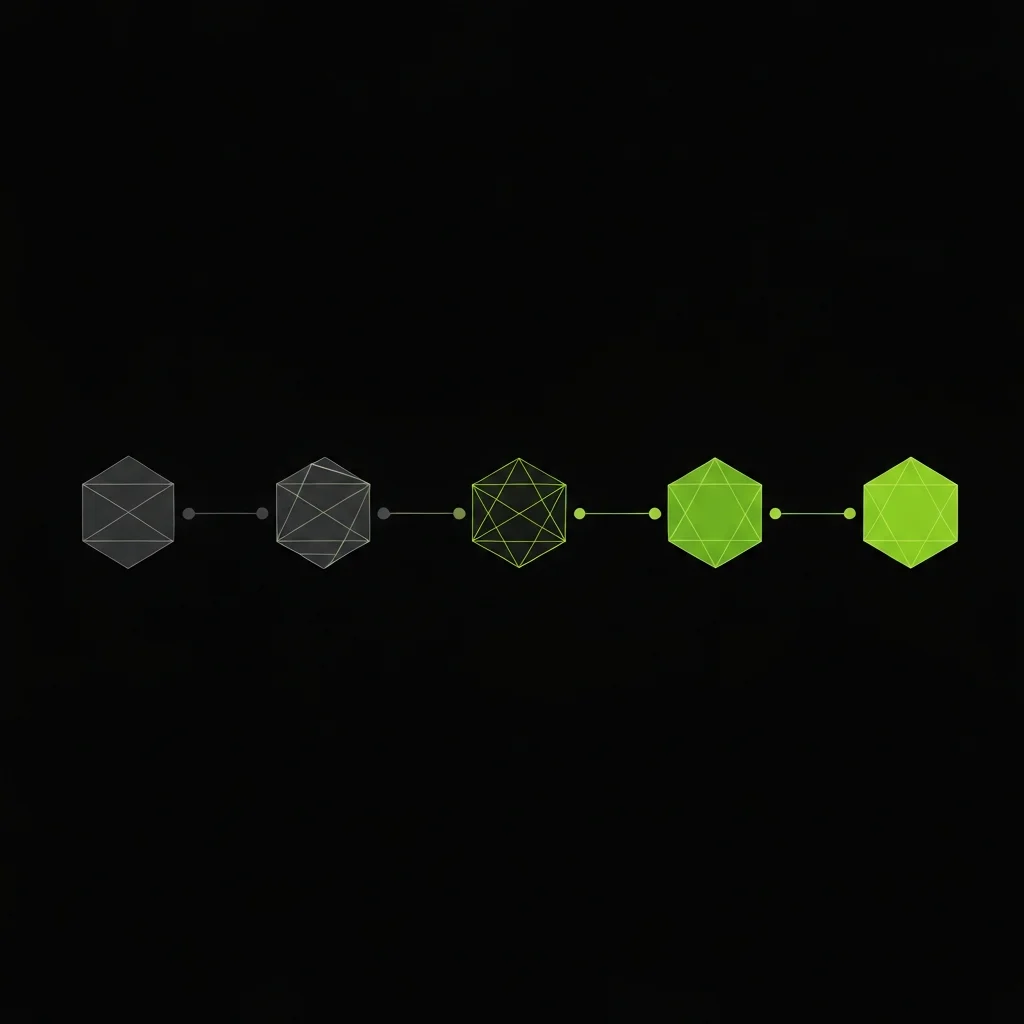
Before building a transformation roadmap, you need an honest assessment of where you are. We use a four-stage maturity model when evaluating Bahrain startup DevOps capabilities:
Stage 1: Manual Operations
Characteristics: Deployments are manual scripts or direct server access. No CI/CD pipeline. Infrastructure is hand-provisioned and undocumented. Monitoring is limited to “is the server up?” alerts. Secrets are in environment files or, worse, in Git.
Typical company: Pre-Series A startup, 3-8 engineers, single product, single environment.
Risk profile: High risk of deployment errors. No rollback capability. Single points of failure in infrastructure knowledge. Unacceptable for any regulated customer.
Stage 2: Basic Automation
Characteristics: CI pipeline runs tests on PR. Deployment is semi-automated (push-button or merged-to-deploy). Infrastructure is defined in Terraform but not all resources are covered. Basic monitoring with Datadog or CloudWatch. Secrets in AWS Secrets Manager.
Typical company: Series A startup, 8-15 engineers, beginning to serve enterprise customers.
Risk profile: Moderate. Deployments are repeatable but still require human oversight. Recovery from failures depends on individual knowledge.
Stage 3: Standardised Operations
Characteristics: Full CI/CD with GitOps. Infrastructure as Code covers all environments. Observability stack with metrics, logs, and traces. SLOs defined for critical services. Incident management process with postmortems. Automated security scanning in pipeline. Multiple environments (dev, staging, production) with promotion workflow.
Typical company: Series B startup, 15-30 engineers, multiple teams, enterprise customers with compliance requirements.
Risk profile: Low. Deployments are routine. Recovery is documented and tested. The system can operate without any single person.
Stage 4: Platform Engineering
Characteristics: Internal developer platform with self-service capabilities. Developers can provision environments, deploy services, and access observability without DevOps team involvement. Golden paths for common patterns. Service catalogue. Developer portal (Backstage or similar). Platform team operates as a product team serving internal developers.
Typical company: Series C or growth-stage startup, 30+ engineers, multiple product lines, operating as a technology platform.
Risk profile: Very low. The platform itself enforces best practices. New services inherit security, observability, and deployment patterns automatically.
Most Bahrain startups we work with are at Stage 1 or early Stage 2. The transformation roadmap below takes you from Stage 1 to Stage 3 in 90 days, with a clear path to Stage 4 in the following quarter.
The 90-Day Transformation Roadmap
Days 1-7: Assessment and Quick Wins
DevOps maturity assessment. We audit your current deployment process, infrastructure, monitoring, security posture, and team workflows. This produces a scored assessment across 12 dimensions with specific recommendations prioritised by impact and effort.
Quick wins deployment. In the first week, implement changes that require minimal effort but deliver immediate value:
- Enable branch protection on your main branch (no direct pushes)
- Move any secrets from Git to AWS Secrets Manager
- Set up basic uptime monitoring (if it does not exist)
- Enable automated backups for databases (if not already configured)
- Create a shared incident response Slack channel
These are not transformational changes. They are risk reduction measures that protect you while the real transformation work begins.
Days 8-30: Foundation - CI/CD Pipeline
Week 2: CI pipeline. Implement a CI pipeline (GitHub Actions is the default choice for Bahrain startups on AWS) that runs on every pull request:
- Dependency installation with caching
- Linting and formatting checks (automated code style eliminates review friction)
- Unit and integration tests in parallel
- Security scanning with Semgrep or similar
- Container image build with Trivy vulnerability scanning
- Pipeline target: under 8 minutes for a typical web application
Week 3: CD pipeline - staging. Implement automated deployment to staging:
- GitOps with ArgoCD - merges to
mainautomatically deploy to staging - Health checks that verify the deployment succeeded
- Smoke tests that validate critical user flows post-deployment
- Slack notifications on deployment success or failure
Week 4: CD pipeline - production. Implement controlled deployment to production:
- One-click promotion from staging to production (manual gate)
- Canary deployment strategy - 10% traffic for 15 minutes before full rollout
- Automated rollback on error rate spike
- Deployment audit log (who deployed what, when)
By the end of Day 30, every code change follows a consistent path: PR, review, merge, automatic staging deployment, validated promotion to production. The “Ahmed runs the script” pattern is eliminated.
Days 31-60: Infrastructure as Code and Environments
Week 5-6: Terraform/OpenTofu for all infrastructure. Audit every piece of infrastructure in your AWS account and bring it under Infrastructure as Code:
- VPC, subnets, security groups, load balancers
- EKS cluster configuration (or ECS, depending on your platform)
- RDS databases, ElastiCache, S3 buckets
- IAM roles and policies
- Route53 DNS records
- State stored in S3 with DynamoDB locking
The goal is not just documentation - it is reproducibility. If your production environment were deleted, you should be able to recreate it from code in under 2 hours.
Week 7-8: Environment parity. Create staging and development environments that mirror production:
- Same infrastructure topology (smaller instance sizes are fine)
- Same deployment process
- Anonymised production data seeded into staging for realistic testing
- Environment-specific configuration managed via Kubernetes ConfigMaps and Secrets
Environment parity eliminates the “works in staging, breaks in production” class of incidents that plagues teams with manually managed environments.
Days 61-90: Observability, SRE, and Security
Week 9-10: Observability stack. Implement production-grade observability:
- Prometheus and Grafana for metrics (or Datadog if budget permits)
- Loki for log aggregation (or Datadog Logs)
- OpenTelemetry instrumentation for distributed tracing
- SLO dashboards for top 5 customer-facing services
- Alert routing via PagerDuty with escalation policies
Week 11: Incident management. Establish a structured incident response process:
- Severity definitions (SEV-1 through SEV-3) with clear criteria
- On-call rotation (minimum two engineers)
- Incident response runbooks for known failure modes
- Postmortem template and process (blameless, action-item-driven)
- For regulated sectors: CBB incident reporting workflow integration
Week 12: Security hardening. Implement security controls that satisfy enterprise customer requirements:
- Network policies restricting inter-service communication
- Pod security standards enforced at the namespace level
- Image signing and admission control (only approved images deploy)
- Automated dependency vulnerability scanning with Dependabot or Renovate
- Audit logging for all administrative actions
By Day 90, your engineering team operates with the tooling and processes of a Stage 3 organisation. Deployments are automated, infrastructure is reproducible, observability is comprehensive, and incidents are managed systematically.
Cost and Tamkeen Funding
A 90-day DevOps transformation for a typical Bahrain startup costs between BHD 8,000 and BHD 15,000 depending on scope and complexity. This covers consulting, implementation, and knowledge transfer to your team.
Tamkeen’s Enterprise Development Support can reimburse 50-70% of this cost for eligible Bahrain companies. The application process requires:
- A clear project description with defined outcomes
- Quotation from the consulting provider
- Evidence that the investment supports business growth (enterprise customer pipeline, scaling plans)
- Post-project report demonstrating outcomes achieved
We help clients prepare Tamkeen applications as part of our engagement - the documentation required for the grant application overlaps significantly with the assessment deliverables we produce in Week 1.
Beyond Day 90: The Path to Platform Engineering
The 90-day transformation builds the foundation. The next phase - moving from Stage 3 to Stage 4 (platform engineering) - is a 3-6 month initiative that includes:
- Developer portal (Backstage) with service catalogue and documentation
- Golden paths - pre-configured templates for new services that include CI/CD, observability, and security by default
- Self-service infrastructure - developers provision databases, caches, and queues through the portal without filing tickets
- Platform SLOs - the platform team measures its own reliability and developer satisfaction
Stage 4 is where DevOps truly scales. Instead of a DevOps team that is a bottleneck for every infrastructure request, you have a platform team that builds tools and a development organisation that moves independently. This is the operating model that supports 30, 50, or 100 engineers without proportional growth in infrastructure headcount.
Starting the Transformation
The biggest risk for Bahrain startups is not that the transformation will fail - it is that they will defer it until the cost of their current approach becomes a crisis. Every month of manual deployments accumulates technical debt. Every enterprise deal lost to an inadequate security posture is revenue that does not come back. Every senior engineer who leaves because the tooling is frustrating is a 3-4 month hiring gap.
The 90-day roadmap is designed to deliver value incrementally - you see improvements in deployment speed and reliability within the first 2 weeks, not after 3 months of invisible foundation work.
Contact us for a free DevOps maturity assessment - we will evaluate your current practices against the four-stage model and give you a prioritised transformation roadmap in a 30-minute call.
Get Started for Free
Schedule a free consultation. 30-minute call, actionable results in days.
Talk to an Expert